
Confused? Live the Questions

Years ago I was burned out, living life on a treadmill, unhappy most of the time. I wanted my life to be different. But how? I didn’t know. I knew I needed to make a change, but what kind of change? What did I want? What would make me happy? I felt utterly confused.

Confusion. UGH! I hate it when I feel this way, don’t you? So unsettling! When confused, we naturally search for answers. We comb the archives of our minds, analyze our thoughts, and ask others for advice. We rehash ideas and mull things over, but if answers don’t come quickly, we often give up.

Thankfully I didn’t give up. My therapist wouldn’t let me. She suggested that I stop trying so hard to figure things out, and instead, simply allow my thoughts to come and go. Confusion always comes before clarity, she said. Be patient. Answers will come.

The great German poet, Rainier Maria Rilke, offered similar advise to a confused young poet:

Be patient toward all that is unresolved in your heart and try to love the questions themselves. Live the questions now. Perhaps then, someday far into the future, you will gradually, without noticing it, live your way into the answers…You are looking outside, and that is what you should most avoid right now. No one can advise you or help you – no one. There is only one thing you should do. Go into yourself. Be attentive to what is arising in you, and place that above everything you perceive around you.

         Go into yourself. Live the questions. Talk about confusing! Waiting for answers to “arise” is something most of us weren’t taught to do. We were taught to arrive at a solution as fast as possible. Remember those timed tests we took in school? We were taught to analyze facts, apply reason, and logically figure things — quickly. Seldom were we encouraged to pay attention to what was arising in our minds — slowly. That was called daydreaming, and daydreaming meant you weren’t paying attention to the teacher, the teacher “outside” of you.

Well, let me introduce you to another teacher, your “inner teacher.”  I believe that each of us has an inner guide, a wise-self that emanates from soul, not ego or intellect. This intuitive voice offers up subtle clues and serendipitous occurrences when we stop searching outside ourselves, and instead, start listening to our true self within. This quiet voice of soul can’t be rushed. It surfaces when times and conditions are right.

I remember a momentous day when the time was right for my inner teacher to redirect the course of my life. It was January 1, 2007. I was taking a walk on a crisp, blue-sky day, nothing to do except enjoy a quiet beginning to the New Year. All the questions I’d been asking were nowhere in mind. Interestingly, that’s when the answer appeared out of nowhere. A voice rang out, clear as a bell, Go back to school! My analytical mind immediately intruded, Graduate school at age 50. Really? But the mystical voice didn’t concede. It continued, reminding me of two friends who had gone back to school at mid-life to get their degrees in counseling. Wow! Better sleep on this, I thought. After all, it was a big commitment to make at any age, especially my age.

The next day I proceeded to get back to business, and as always, the first thing I did was check my email. OMG! In the mix of mostly junk, two significant emails appeared — one from each woman who had come to mind the day before. I was blown away. You see, I hadn’t communicated with either in over three months. But on Jan 2nd, their emails affirmed that it was time for me to go back to school.

Amazing, yes, but not at all surprising. I had started my masters in counseling at 25-years old, but abandoned my dream to start a career in business. I had told myself then that I could return to school later in life, and later was apparently now.

Just as Rilke had advised, I had lived the question, patiently. Life had prepared me to be a psychotherapist in ways academia never could. Confusion was gone. My answer had arrived at the perfect time.
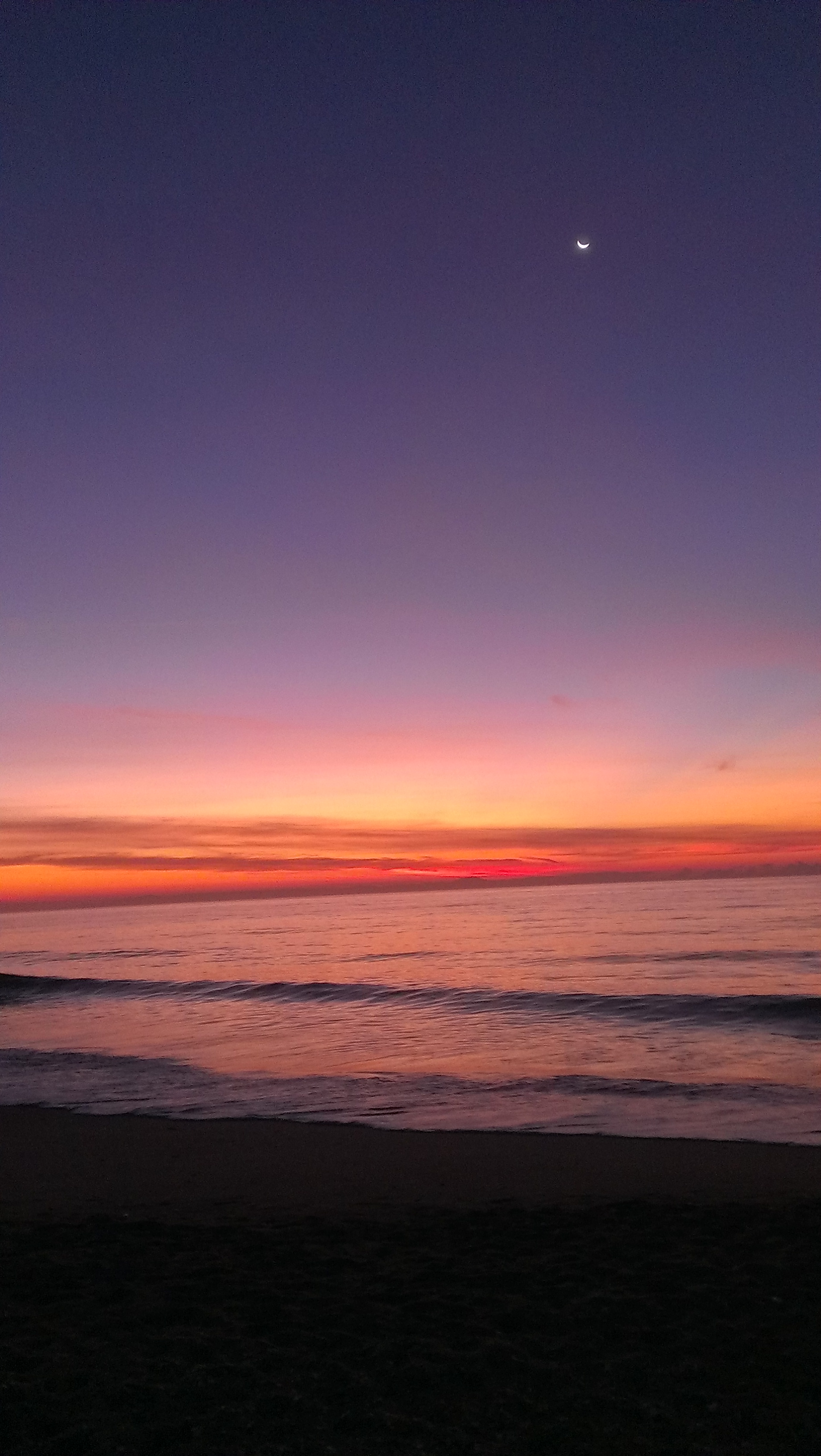
The Ebb & Flow of Life

We have so little faith in the ebb and flow of life, of love, of relationships. We leap at the flow of the tide and resist in terror its ebb. We are afraid it will never return. IMAG0268

Anne Morrow Lindbergh

I recently went to the seashore after experiencing a significant loss. I longed to be still in a tranquil place to feel my feelings and do what Anne Morrow Lindbergh so eloquently describes in Gifts From the Sea – to accept the ebb and flow of life. Morrow Lindbergh continues… We insist on permanency, on duration, on continuity; when the only continuity possible, in life as in love, is in growth, in fluidity—

Endings, no matter how painful, are necessary to our growth and renewal. Consider how nature illustrates this enduring truth. Colorful leaves turn into murky mulch as fall turns into winter. Winter storms bear down on us, blustering winds and frozen rain, until sprigs of green appear on a sun-drenched branch in spring. Ebb tides, the period between high tide and low tide in which the sea recedes, occur daily, water pulled by the force of the moon in the darkness.

Little light shines when we experience a loss; the pull of darkness is palpable. Anger and sadness, melancholy and mournfulness pull at our heartstrings. Our bodies grow tired; our minds struggle to let go. Life feels hard, overwhelming sometimes, but over time, grief transforms us.

Griefwork, according to author and psychotherapist, Miriam Greenspan, is not a return to the pre-loss status quo, but an opportunity for a wholly new awareness of reality, self, beloved, and the world…. One way or another, we construct a meaning story, and it is through this story that we find acceptance.

The opportunity Greenspan speaks of can never be rushed. A tide doesn’t turn in an instant, IMAG0265and fruit on the vine doesn’t ripen until it’s time. In nature, there are seasons of stillness, yet human nature (especially in our 24/7 world) struggles to embrace transitory times. We leap into the next job or relationship, grabbing hold of something or someone to help us feel more secure or less heartbroken. We get busy doing, distracting, or denying our feelings, fearing we’ll drown in the ebb tide of sorrow.

But we won’t drown if we allow the waves of grief to take their natural course. The poet William Butler Yeats affirms this truth…How many times man lives and dies between his two eternities.

It’s never easy to be still and contemplate life’s endings, but it’s the only way I know to make meaning out of loss. Greenspan knows this all to well, having lost a child two months after his birth. She offers us hope for Healing Through the Dark Emotions, reminding us that out of this stillness an imperceptible movement occurs, from sorrow for what has been lost to gratitude for what remains.

Emotional Honesty

The final regret of the dying, according to Bronnie Ware, author of The Top Five Regrets of the Dying: A Life Transformed by the Dearly Departing, is “I wish I had the courage to express my feelings.”  Many of her patients suppressed their feelings in order to keep peace with others. Ware writes, They settled for a mediocre existence and never became who they were capable of becoming. Many developed illnesses relating to bitterness and resentment they carried as a result.

What might their lives have been like if they chose to be emotionally honest? How might your life be different if you told others how you truly felt?

Recently, I worked with a client who was a breast cancer survivor. She was a highly intelligent woman, yet deeply disconnected from her feelings. She talked about locking her emotions away in a “Pandora’s Box.” She was acutely aware of how this choice fueled her passive-aggressive behavior and caused her to drink too much. Still, she didn’t know how to change her ways. She was terrified of opening up what was hidden deep inside.

I gently probed to help her discover why she continued to stuff her feelings. While sharing her childhood history, she told me that she never saw her mother cry until two years prior to our meeting (this woman was 51 yrs of age.) Interestingly, her mother had lost one son in an automobile accident and another to a chronic illness years before (my client’s brothers) and lost nearly all of her possessions in Hurricane Katrina.

Hmm! Such tragedy, yet my client’s mother hadn’t shed a single tear over the death of her children or loss of her worldly possessions, at least not in public. Hmm? Nor did my client cry while recounting this story or talking about her emotionally abusive marriage.

I don’t know about you, but I would have been boohooing for days. Crying for me is cleansing, a salve to heal my soul. Still, many individual have difficulty expressing their feelings, especially the “negative” kind, like sadness, fear, and grief. Like my client, many people were taught that being emotional means being weak, overly sensitive, or disrespectful. Buck up and stop being a crybaby. There’s nothing to be afraid of (you wimp). Don’t you raise your voice young lady! That’s no way for a nice girl to act.

Thankfully, times are changing. Daniel Goleman’s book on Emotional Intelligence (EQ) has changed our minds and begun to change our hearts. Yet still, EQ only scratches the surface. It doesn’t address what’s tucked away in Pandora’s Box. That’s why my client, and millions of people all over the globe, continue to numb their feelings with alcohol, drugs, food and other addictive pastimes; distract themselves with work, shopping, and other compulsive activities; or dissociate from painful memories for fear that overwhelming emotions will take them down.

Being aware of your feelings IS the first step, but it’s insufficient in creating a healthy life. Renowned neuroscientist, Candance Pert, has proven that emotions reside in every cell of our bodies, and that when we stifle the flow of our emotional energy, sorrow can turn into depression, anger into aggression, and fear into phobias or panic attacks. And it’s not only our mental health that is negatively affected. Neuroscience is proving that bottled up emotions can contribute to systemic inflammation in our bodies which results in cancer, heart disease, and Alzheimer’s.

To live our best lives and die with little regret, I believe it’s essential to let out our feelings in a constructive manner. According to author and psychotherapist, Miriam Greenspan…

Goleman’s focus on the need to control potentially destructive impulses neglects the value of free-flowing emotional energy when it’s mindfully tolerated. The free flow of the dark emotions can’t happen in a contain-and-manage kind of process. What Goleman wants control to accomplish is better accomplished through emotional tolerance and mindfulness. These skills prevent the dark emotions from becoming destructive. When we can tolerate emotional energy mindfully, we can control our impulses without suppressing our emotions. Strictly speaking, it’s not our emotions that we control, but our actions. The emotional intelligence of the dark emotions moves us not to management but to transformation.

Learning to be emotionally honest can be scary. Expressing your feelings to those that matter does take courage. But remember, if you learned to suppress you can learn to express.

If you need a helping hand in opening up your Pandora’s Box, I highly recommend Greenspan’s book, Healing Through the Dark Emotions. But don’t stop there. Spend some time with a trusted therapist or a caring friend who can comfort you along the way.

Choose Happiness

The third regret of the nearly departed, according Bronnie Ware, author of The Five Regrets of the Dying, is not choosing to live a happier life. Unfortunately, it wasn’t until the end of life, that the dying people Ware cared for realized that the fear of change kept them pretending to others, and to themselves, that they were content. They settled for the “so-called” comfort of familiarity, and in doing so, they remained stuck in old patterns and habits. Pretense trumped happiness.

Thankfully, happiness is becoming a hot topic these days, not only in the popular press, but more surprisingly, with policy makers around the world. Just last month, the United Nations published the first ever World Happiness Report and Congressman Tim Ryan of Ohio shared the stage at an international symposium with a Buddhist monk, Matthieu Ricard, who has been dubbed the “happiest person in the world.”  Even though Ryan and Ricard spend the majority of their time in vastly different worlds, Washington vs. Tibet, both men share a common reality that holds the promise of increasing happiness for people all over the globe.

According to Ricard, right-hand man for the Dalai Lama, and author of Happiness, A Guide to Developing Life’s Most Important Skill, achieving durable happiness is a skill that requires sustained effort in training the mind and developing a set of human qualities such as inner peace, mindfulness, and altruistic love. Ryan, in his recently published book, A Mindful Nation, writes about the key elements needed to take on the challenges we face in our country—inner strength, resilience, and awareness of who we really are.  These two men share a similar philosophy and practice a skill that has contributed to human happiness throughout the ages—mindfulness meditation.

Neuroscience is proving that mindfulness plays a key role in creating well-being and reducing negativity, not only in individuals, but in society at large.  Now you may be thinking, I’d be happier having more cash in the bank and a new car in the garage. Mindfulness! How in the world will this make me happy?  Just hear me out.

The pursuit of happiness, a key principle of our democracy, has come under increased scrutiny since the economic meltdown–and rightly so. Many of us have fallen into a state of depression or grown anxious over how to pay our bills. I understand completely, and I empathize. But I also know that happiness isn’t simply achieved by making more money. Research shows a weak correlation between income and global happiness.

Personal wealth definitely impacts our level of “life satisfaction,” a subjective measure used in Hedonic Psychology, but it has little or no impact on our “eudaimonism,” a state of well-being that results from living in accordance with our daimon, or true self. This ideal may sound New Age-y, but it’s not. It’s older than dirt, a philosophy birthed by Aristotle.

Eudaimonic well-being occurs when people’s life activities mesh with deeply held values; when people are fully engaged and feel intensively alive and authentic. Maybe that’s why Ricard, a monk who lives in a monastery and donates his book profits to charity, is considered the happiest man in the world. His brain, like that of other long-term practitioners of meditation, has developed the capacity to disengage from mental confusion and self-centered afflictions. Research now proves that meditating strengthens the centers of the brain that contribute to good feelings and compassion.

Food for thought, or “non-thought”, don’t you think? Yesterday, Congressman Ryan encouraged a generation of future leaders at UC-Berkeley on the merits of mindfulness meditation. He’s advocating that schools across America teach the skill of mindfulness to our kids. I never could have imagined that the U.N. would produce a report that contained the word   “happiness” in its title during my lifetime. Nor would I have thought that U.S. economists would be questioning the merits of GDP and considering GNH—Gross National Happiness— following the lead of Bhutan, a nation whose Gross National Income is 18,491 times smaller than ours.

I’m happy to be living at a time when the world is breaking old patterns; I’m grateful to be witnessing the vision of mindful leaders taking root before my eyes.

“Gross National Product does not allow for the health of our children, the quality of their education, or the joy of their play. It does not include the beauty of our poetry or the strength of our marriages, the intelligence of our public debate or the integrity of our public officials. It measures neither our wit nor our courage, neither our wisdom nor our learning, neither our compassion nor our devotion to our country; it measures everything, in short, except that which makes life worthwhile.” –Robert F. Kennedy